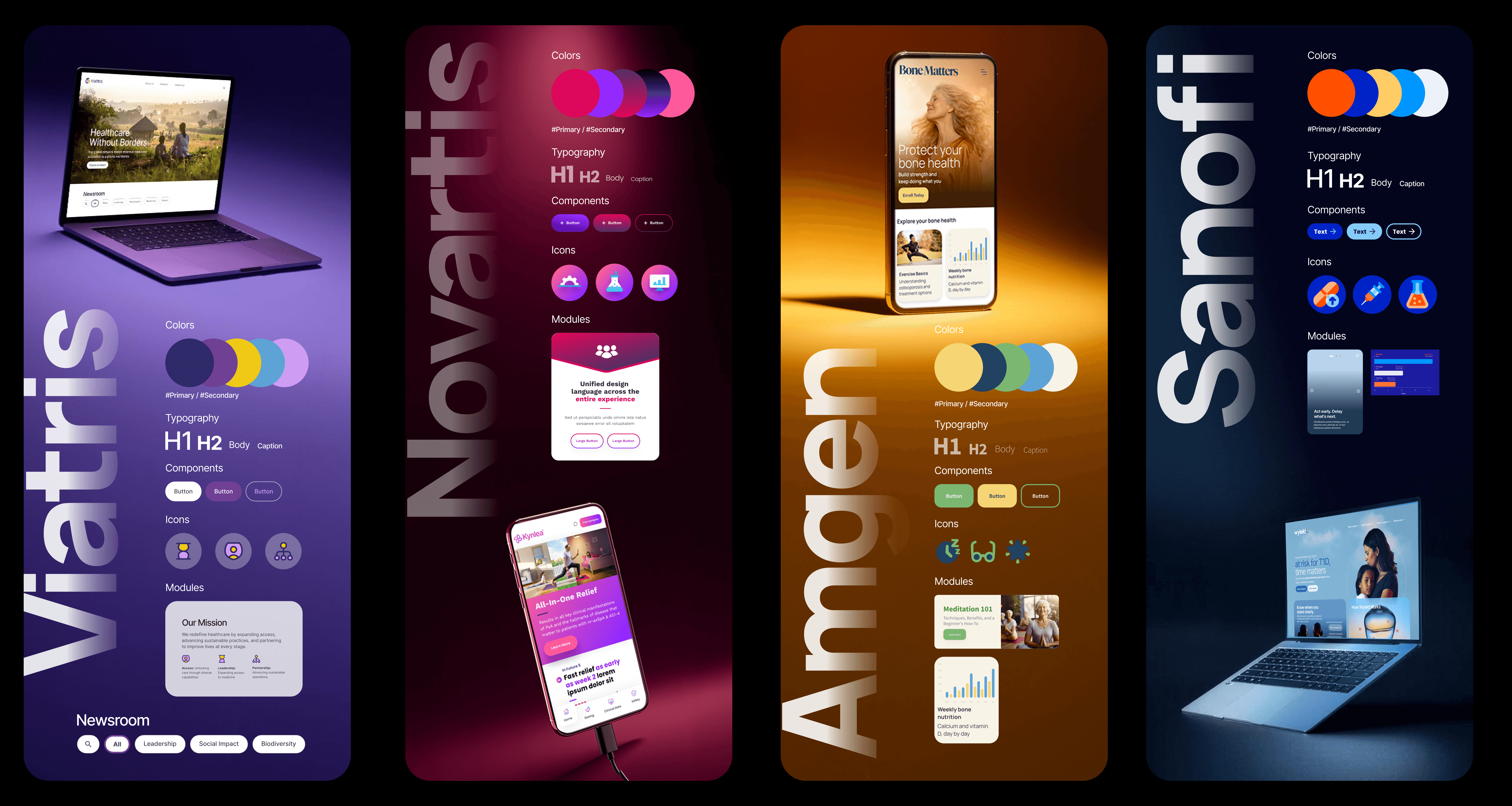
Four Design systems

Each built to solve real product complexity, improve delivery speed, and standardise experience across platforms.
Problem

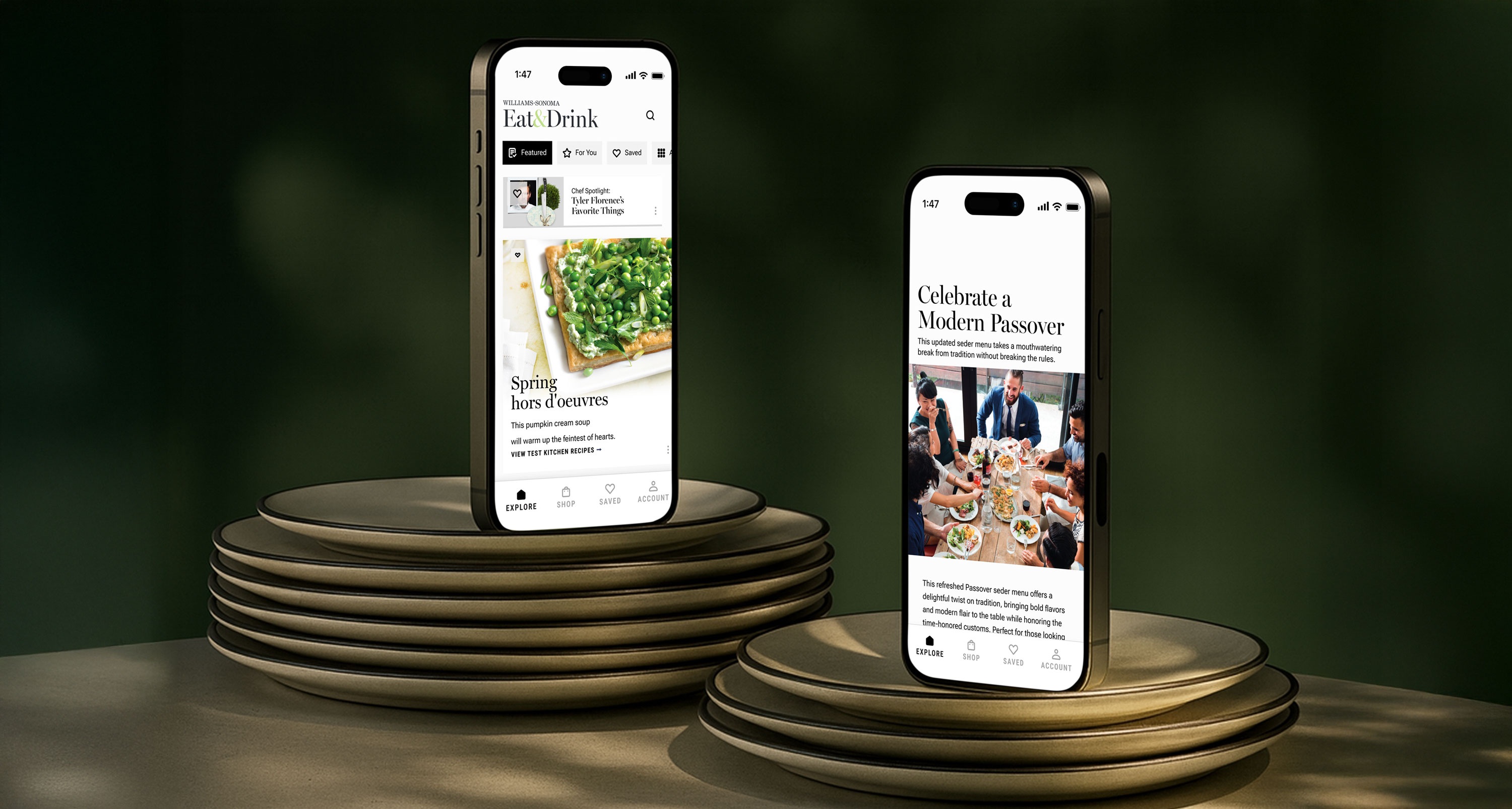
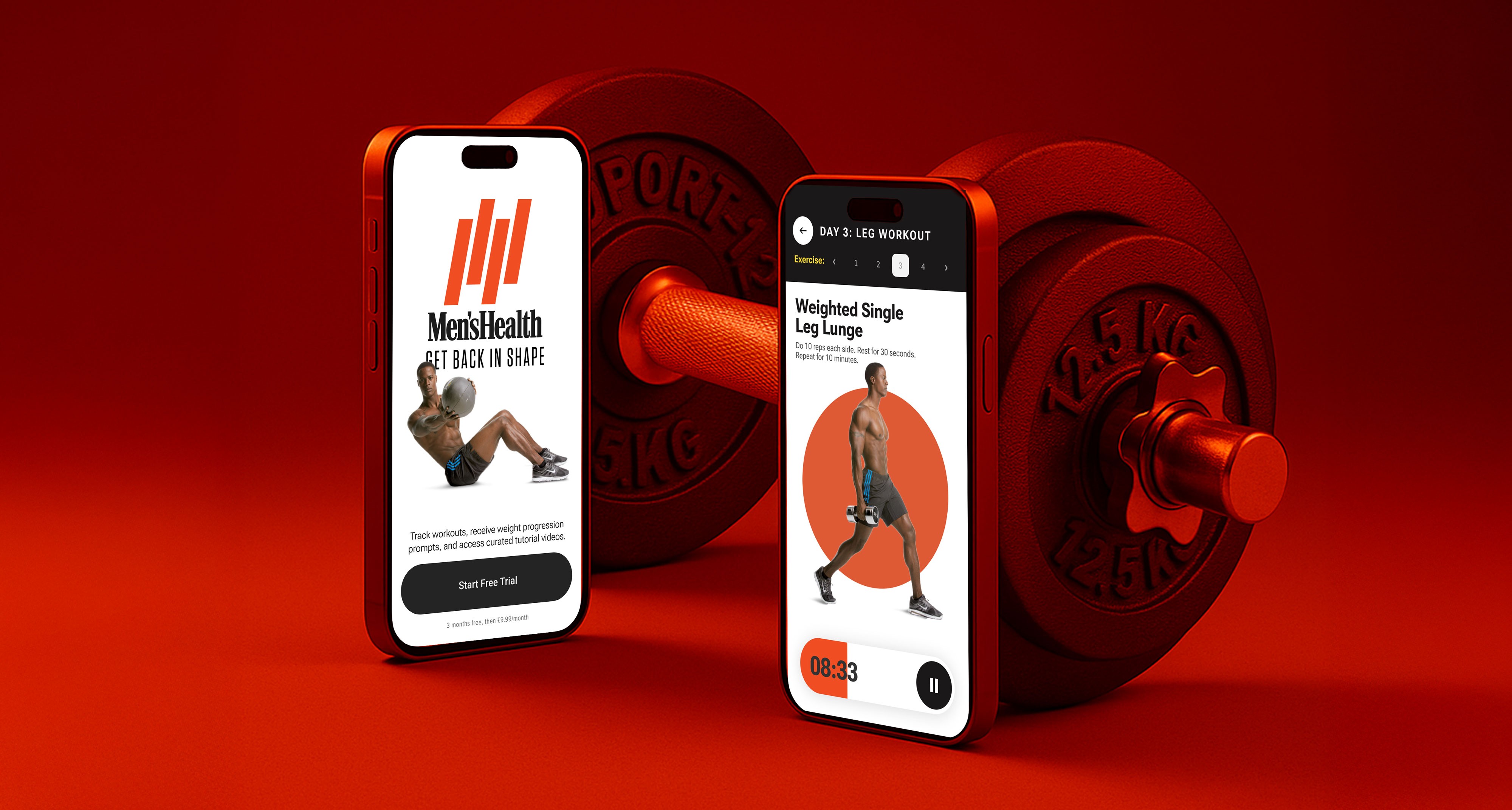
Men’s Health wanted to turn its trusted training expertise into a digital experience. The challenge was to guide users through structured programs that adapted to their fitness level, while staying true to the brand’s confident, motivating tone.

Solution

Partnered with Men’s Health editors and trainers to bring expert fitness content to life in a motivating digital experience. Simplified discovery and program flow to help users stay consistent, and delivered a bold, structured app that launched as a 20-day guided plan.

Problem

Each of the four systems started from a different place — a post-merger brand with competing stakeholders, a multi-product portfolio needing a single source of truth, a distributed team of 16 designers across 6 countries working to a 6 week deadline, and an enterprise platform scaling across multiple channels, audiences and style eras simultaneously. There was no single problem. There were four, each harder than the last.

Solution

A design system approach that adapted to the constraints of each organisation rather than applying a fixed methodology. Stakeholder alignment, source of truth governance, atomic delivery at speed, and enterprise-scale architecture — each system was built for what that specific context demanded, while carrying forward what was learned from the one before.

Process & Approach

Alignment

Each system required a different stakeholder approach: politics, source of truth, governance, coordination.

Aligning designers, engineers, and clients was as much a leadership challenge as a design one.

Brand designers onboarded into each system to reduce asset inconsistency at the source.

Alignment

Each system required a different stakeholder approach: politics, source of truth, governance, coordination.

Aligning designers, engineers, and clients was as much a leadership challenge as a design one.

Brand designers onboarded into each system to reduce asset inconsistency at the source.

Alignment

Each system required a different stakeholder approach: politics, source of truth, governance, coordination.

Aligning designers, engineers, and clients was as much a leadership challenge as a design one.

Brand designers onboarded into each system to reduce asset inconsistency at the source.

Architecture

Atomic methodology applied across all four — atoms, molecules, components, templates, pages built in sequence

Accessibility baked into components at token level, not retrofitted after build

Motion and interaction states defined as system decisions, not one-off design choices

Architecture

Atomic methodology applied across all four — atoms, molecules, components, templates, pages built in sequence

Accessibility baked into components at token level, not retrofitted after build

Motion and interaction states defined as system decisions, not one-off design choices

Scalability

Storybook used on Novartis to bridge design and engineering for CMS conversion across all products

Systems built to extend — Amgen designed for multi-brand, Sanofi scaled across 7 channels and 2 style eras

Documentation and CMS workshops ensured internal teams could maintain each system without ongoing agency support

Scalability

Storybook used on Novartis to bridge design and engineering for CMS conversion across all products

Systems built to extend — Amgen designed for multi-brand, Sanofi scaled across 7 channels and 2 style eras

Documentation and CMS workshops ensured internal teams could maintain each system without ongoing agency support

The Sanofi design system. Primitive colors, light and dark modes, icon states, and modular components built to scale across a global healthcare platform.
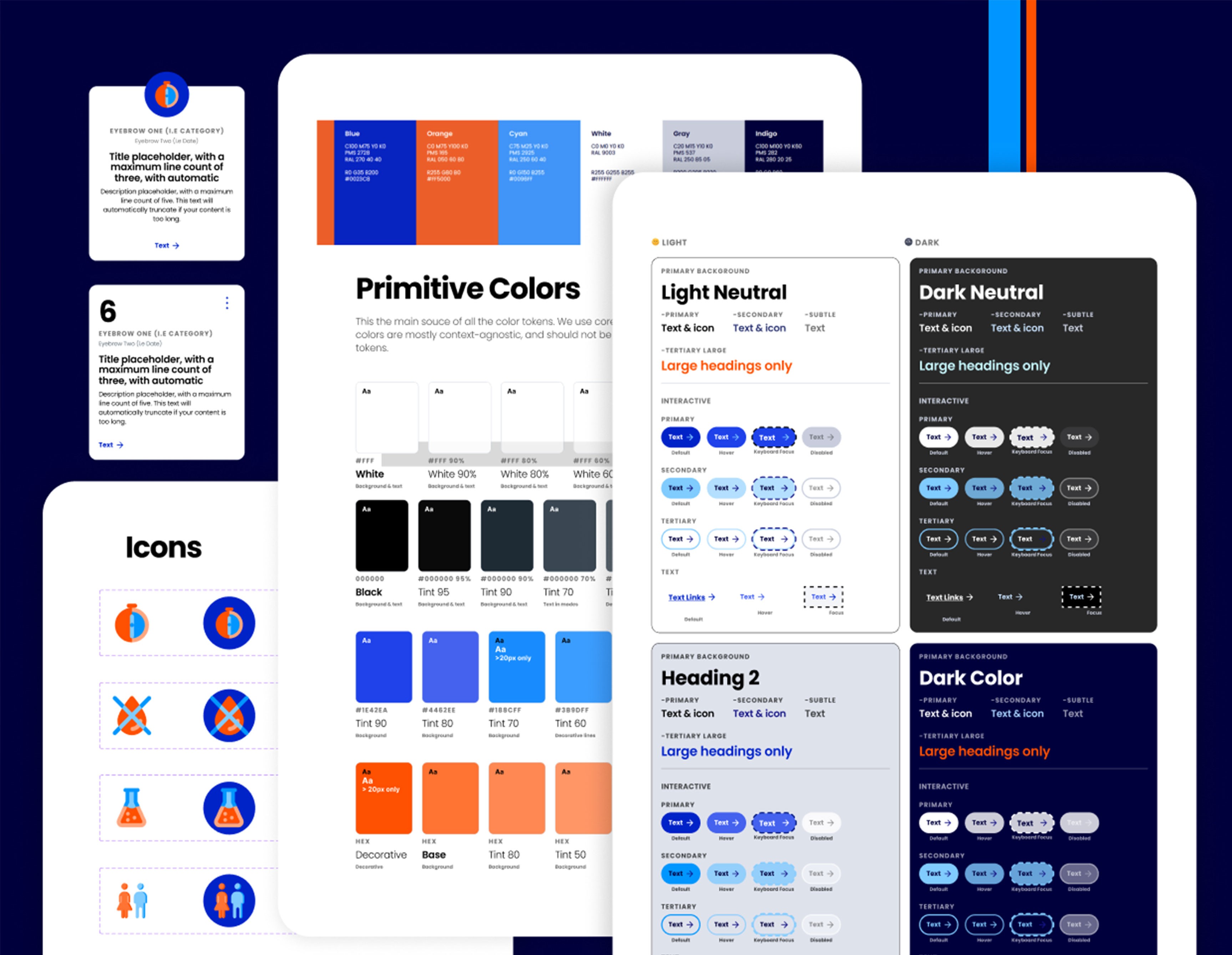
Across these systems I learned that scalability has to be baked in from the start, with lean tokens, variables, and modules that grow without becoming noise. Documentation only works if it is simple, connected, and searchable. Accessibility and motion have to be solved at the component level so every pattern holds up. Fast prototyping with real components lets teams test ideas early and ship with confidence. And the branding has to sit naturally inside the system so the experience feels both functional and emotionally grounded for the people who use it.

industry

Enterprise

timeframe

4 systems over 5 years

team

Led junior designers, partnered with design leads, design ops, product managers, engineers and client stakeholders.

skills & tools

Design systems architecture and governance, component management, accessibility, responsive UI, motion guidelines, Figma, Storybook, Framer, Notion
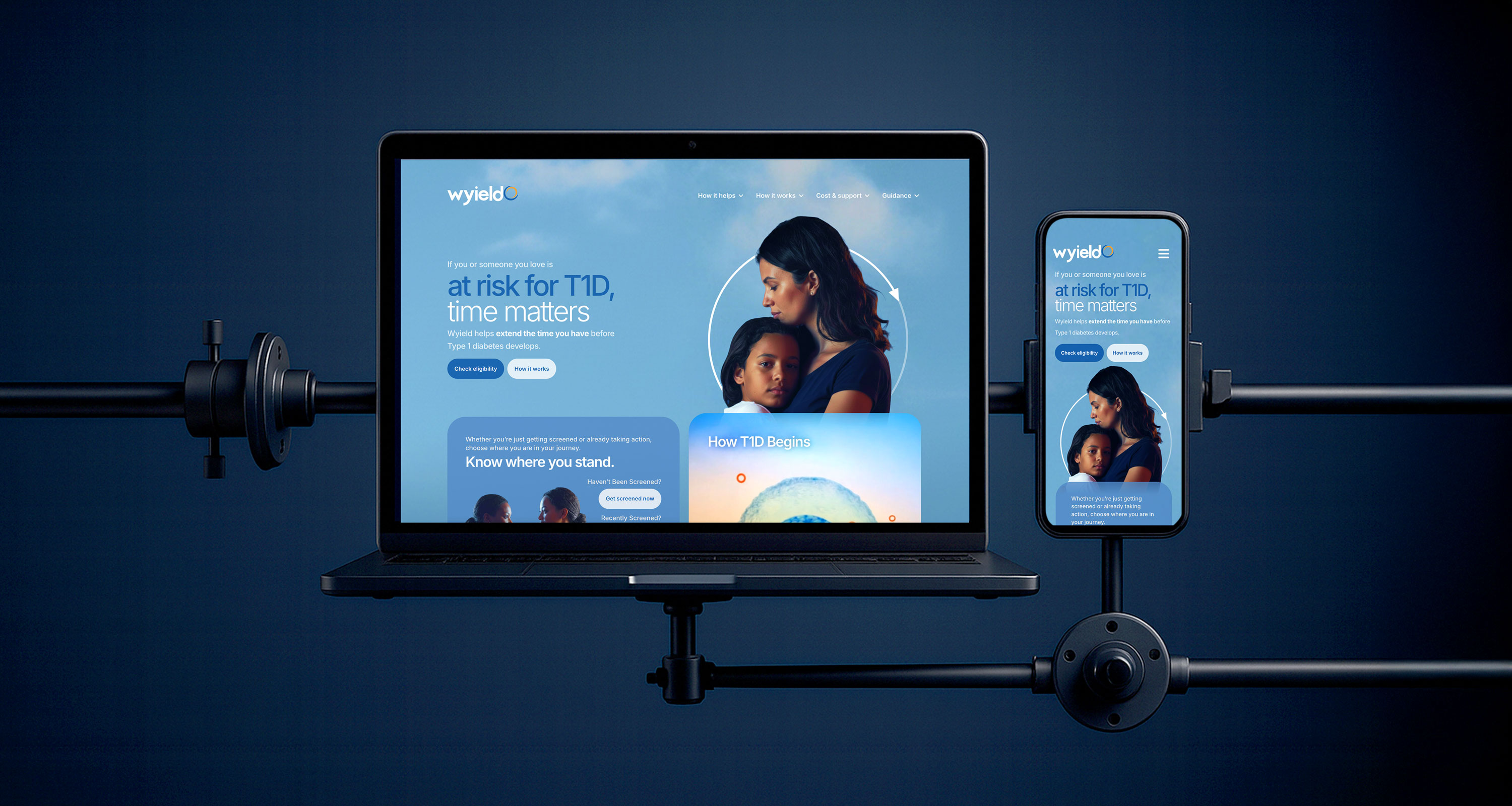
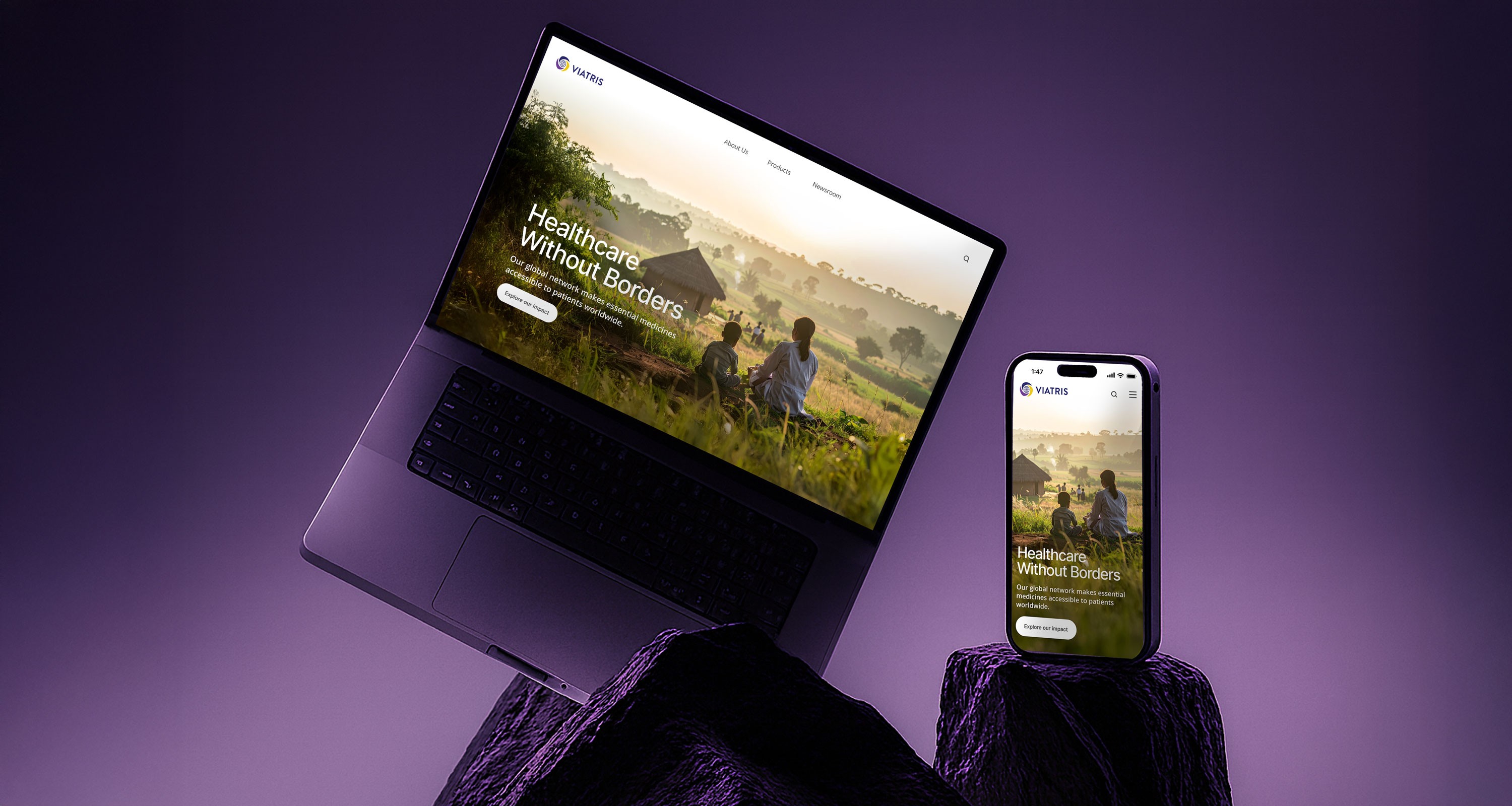
The patient site built from the system, showing how journey-led architecture and benefit-focused messaging replaced clinical language to give users a clear path to next steps from the moment they arrive.

This prototype is built around what users actually responded to in testing. They rejected gimmick-heavy campaigns and focused on four things: what the product is, how it helps them, what it costs, and proof it works for others. The layout reflects that. There is a benefit-first opener with motion, a clear testing and cost section for the three target groups, an MOA that explains how it works, and a testimonial path supported by short looping videos. Everything stays lightweight, simple to scan, and accessible despite the motion.

The mobile experience showing how the journey-led structure holds up at phone scale, with benefit-first messaging and clear pathway choices visible without scrolling.

Results

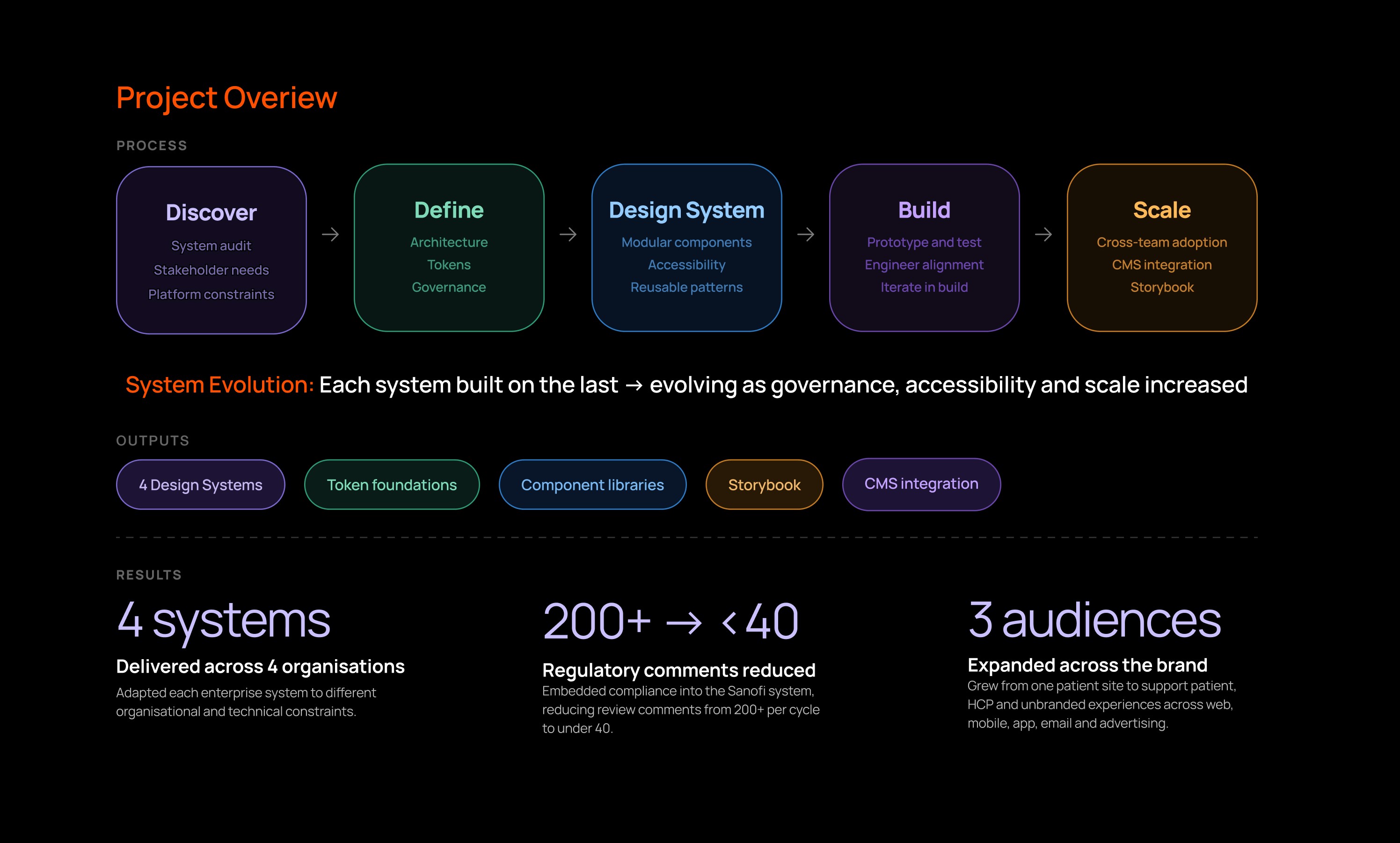
Four enterprise design systems delivered across four organisations, each on time and within scope

100% WCAG accessibility compliance achieved across all Sanofi patient and HCP sites

Regulatory comments reduced from 200+ per cycle to under 40 on Sanofi by embedding compliance into the system

Storybook handoff on Novartis enabled CMS conversion across the entire product portfolio without design rework

What I'd do differently

Use AI to generate and maintain documentation automatically, keeping it lean and current without manual overhead

Build a searchable, navigable doc structure from the start rather than comprehensive documentation that becomes too dense to use quickly

Run more usability testing on component patterns before finalising to catch edge cases earlier

Push for post-launch access on every project to measure whether the systems were actually being used and maintained as intended
i'm open for work and freelance projects, feel free to email me to see how we can collaborate

i'm open for work and freelance projects, feel free to email me to see how we can collaborate