Designing a Beatles Editorial Experience Across Print and Digital
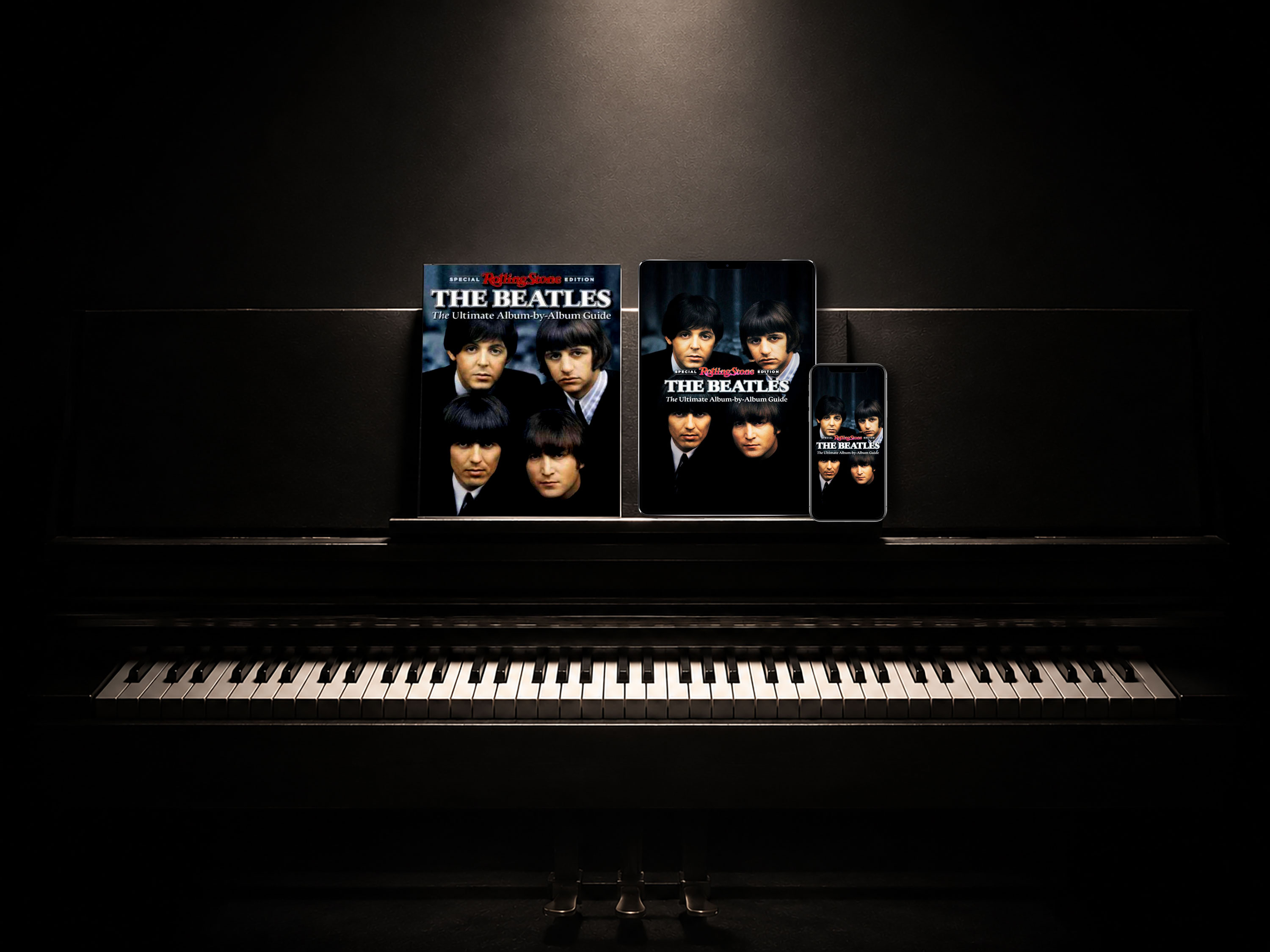
Built for Every Format
I was brought in to design a special edition Beatles book for Rolling Stone. About a week in, someone asked if I'd be interested in also designing the companion app for iPad and iPhone. It took me about half a second to say yes.
The project was structured around the band's full catalogue, one chapter per album, exploring the stories behind individual songs, the cultural forces surrounding the band at the time, and the artists who came after and carried that influence forward. Every chapter needed to work twice: once as a printed page, once as something you could tap into and explore.
Working at Rolling Stone meant working with a room full of Beatles fans. That mattered more than it might sound. There was a shared investment in getting it right. I spent real time alongside photo researchers and content specialists scouring archival images, helping to decide what made it in and what didn't. For someone who grew up with this music, that was one of the better parts of the job.
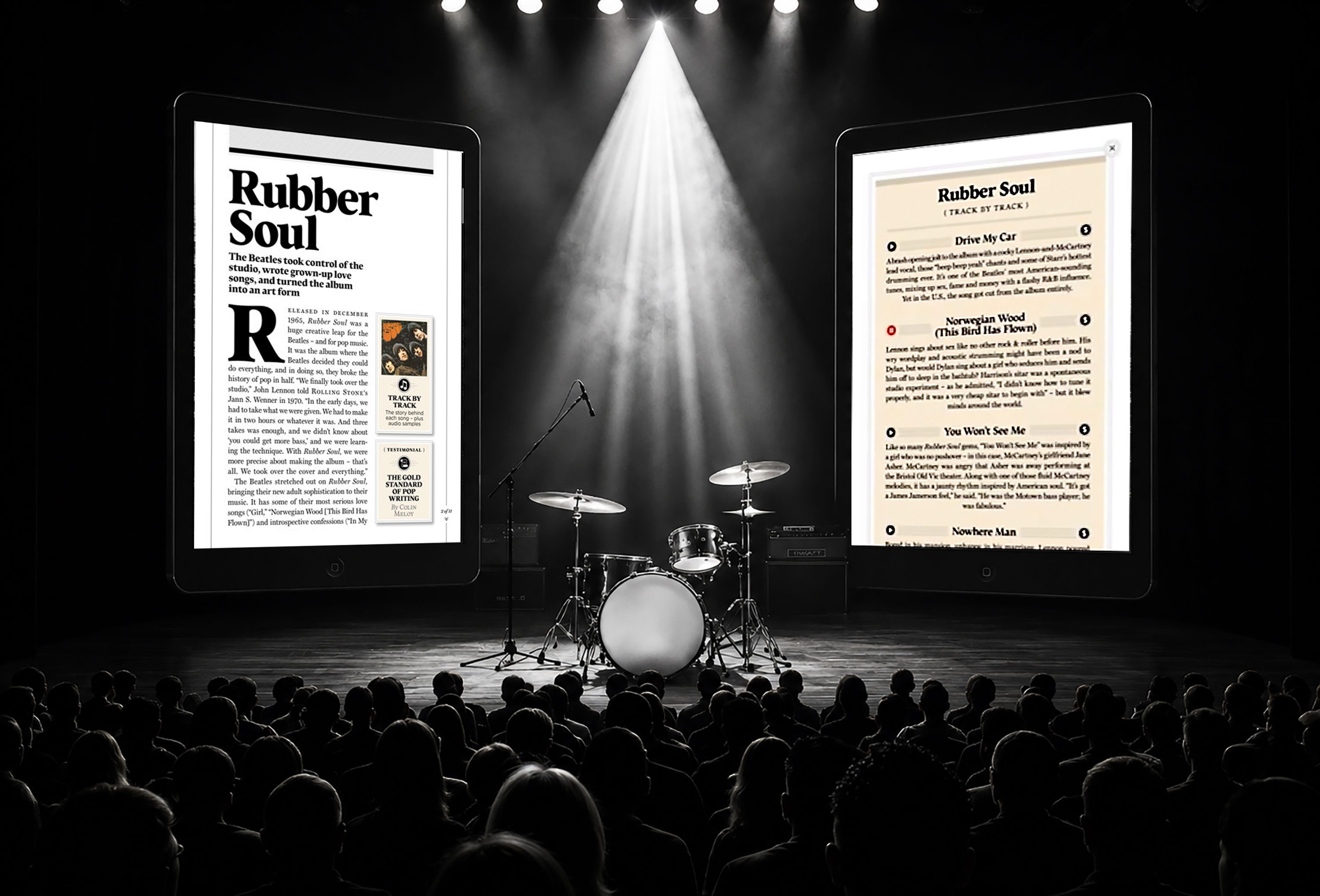
Designed across print and digital
The design challenge had two sides. The Creative Director had a tight, almost newspaper-like design sensibility and the print book reflected that. Disciplined, immersive, built around typography and photography. The app version had to feel like the same object while functioning as a different one. You couldn't just port the print layouts across and call it done.
One area that needed real work was the song pathway: how a reader moved from reading about a track to previewing it to purchasing it. The first version was more complicated than it needed to be. We tested it internally, identified where people were losing the thread, and simplified the flow. Small change, meaningful difference.
The final product gave readers two ways in. The print edition was a collectors piece, sold on newsstands and to subscribers with a premium cover, something worth keeping. The app, available on iPad and iPhone, had everything the book had plus photo slideshows, video, audio, and the ability to play and purchase every song directly. They were promoted together and the book itself pointed readers toward the app. One was the physical object, the other was that same object with everything turned on.
It's not often a project lines up that cleanly with what you actually care about. This one did.
Key Takeaway The Beatles built a catalogue that has lived across every format music has ever had. Getting to be part of bringing that story to life, in print and on screen, was a reminder that great content needs to work in every context it lives in.
date published
18 May 2026
reading time
5 min read